
Thursday, July 23, 2026
Expert Opinions on Screw Foundations – Advantages, Disadvantages, and Common Installation Mistakes
)
Structural Design Engineer
Sales Director
Key Takeaways
Engineers value screw foundations for eliminating excavation and the wait for concrete to cure, with piles ready to carry loads the day they go in.
The method's real limitations are rocky or obstructed ground, reduced productivity at depths beyond 10 meters, and the need for qualified design.
Most problems on site trace back to three mistakes: skipped soil analysis, wrong pile selection, and installation without torque control.
Certified piles, geotechnical data, and documented installation parameters remove nearly all of the risk experts warn about.
Why Experts Recommend Screw Foundations
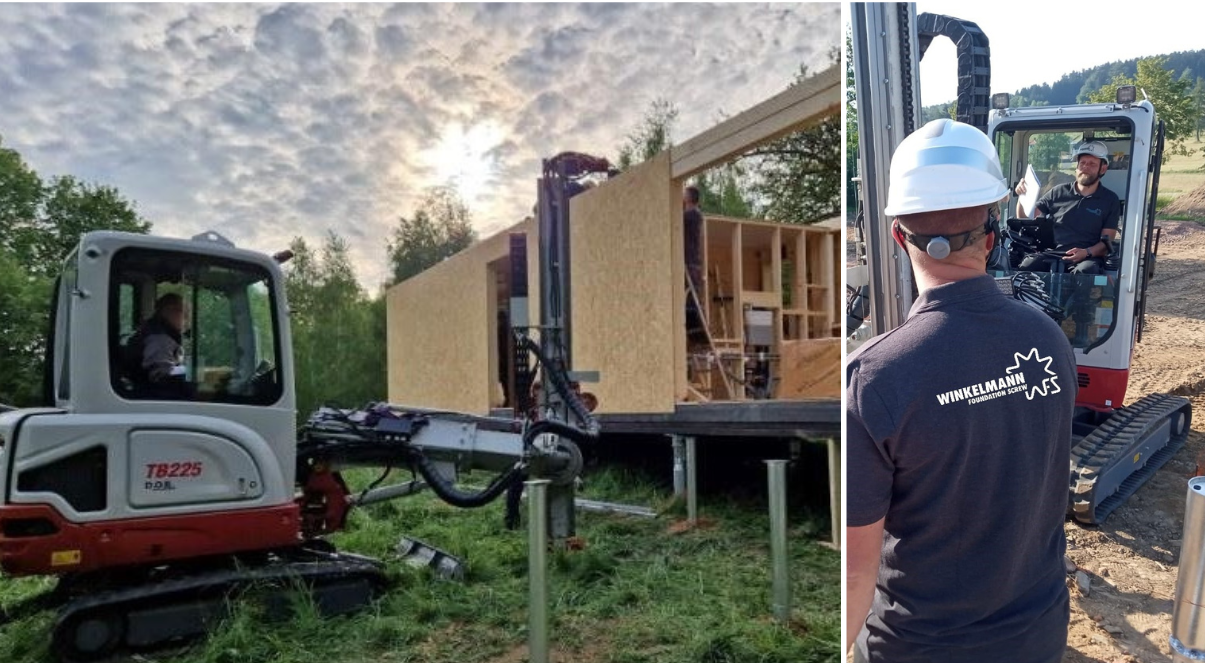
The first advantage every specialist mentions is time. Crews screw the piles directly into the ground, with no excavation, no formwork, and no waiting for concrete to cure. A foundation from Winkelmann Foundation Screw (WFS) is ready to carry load within a single day, and screw pile installation runs year-round. Because the pile displaces and compacts the soil instead of removing it, the ground around the foundation gains load-bearing capacity rather than losing it.
Capacity comes from shaft friction and the bearing of the pile base in deeper, stronger soil layers, which is why the method works in both cohesive and non-cohesive ground. Experts also point to the quiet, vibration-free process, around 65 dB at 10 meters, and to full demountability: piles can be removed and reused without leaving concrete in the ground.
The Limitations Experts Point Out
No foundation technology is ideal for all build sites, and specialists are direct about where screw piles demand extra care. Rocky ground and sites with buried obstacles often require pre-drilling, which slows the work and raises costs. Installation depths beyond 10 meters can cut crew productivity to a quarter of the standard rate, and tight access further reduces it.
The second limitation is competence. Pile capacity must be calculated from real ground data, so a screw foundation is an engineering product, not an off-the-shelf commodity. Quality also varies across the market, which is why experts recommend manufacturers with certified production, confirmed by EN 1090 compliance and the German abZ approval, which backs Winkelmann quality standards.
The Installation Mistakes Experts See Most Often
The most expensive mistake happens before any pile touches the ground: skipping the geotechnical survey. Without soil data, pile length, diameter, and thread profile are guesswork, and guesswork leads to settlement. Professiona lscrew foundation design and technical support start with the project documentation and ground conditions, not with a catalog page.
On site, the critical error is installing without torque monitoring. Installation torque confirms that the pile has reached its required capacity, and modern rigs log torque, depth, and RPM for every pile. A foundation installed without documented parameters cannot be proven to have load-bearing capacity, no matter how solid it looks. Forcing piles into hard ground instead of pre-drilling, and skipping load tests on demanding projects, complete the list.
Planning a project on screw piles? Send your documentation to the WFS engineering team and receive a foundation design matched to your ground conditions, with certified piles and documented installation .Contact Winkelmann Foundation Screw to get a quote.
FAQ
Are screw foundations as durable as concrete?
Yes, when the piles are properly protected and designed. WFS piles are made of structural steel and protected by hot-dip galvanizing, which secures them against corrosion for decades of service. Unlike concrete, they can also be removed and reused at the end of a project.
Can screw piles be installed in any type of soil?
They work in both cohesive and non-cohesive soils, including wet and difficult sites. Rocky ground or buried debris usually calls for pre-drilling before installation. The geotechnical survey determines the right pile and installation method for the specific plot.
Do I need a professional installer?
Light piles, for example under fences, can be installed manually, but structural projects require a calculated design and machine installation with torque control. Documented installation parameters also give you proof of the foundation's capacity.