Thursday, November 26, 2026
Screw Pile Foundations vs Concrete Foundations: What Are the Main Differences?

Structural Design Engineer
Sales Director
Key Takeaways
Screw piles carry load right after installation, so the next stage starts without a curing break.
Load capacity is designed for the ground on site and confirmed by a static load test.
Concrete remains the better fit on rocky ground and under buildings with a basement.
At the end of service, the piles are dismantled and no concrete stays in the ground.
How Do Screw Pile Foundations Carry Loads Compared With Concrete?
A concrete footing passes the load to the soil directly beneath it, so heavier loads and weaker soil mean a larger footing. Bored concrete piles reach deeper, but each needs a drilled hole, which brings noise and vibration, and then time to cure.
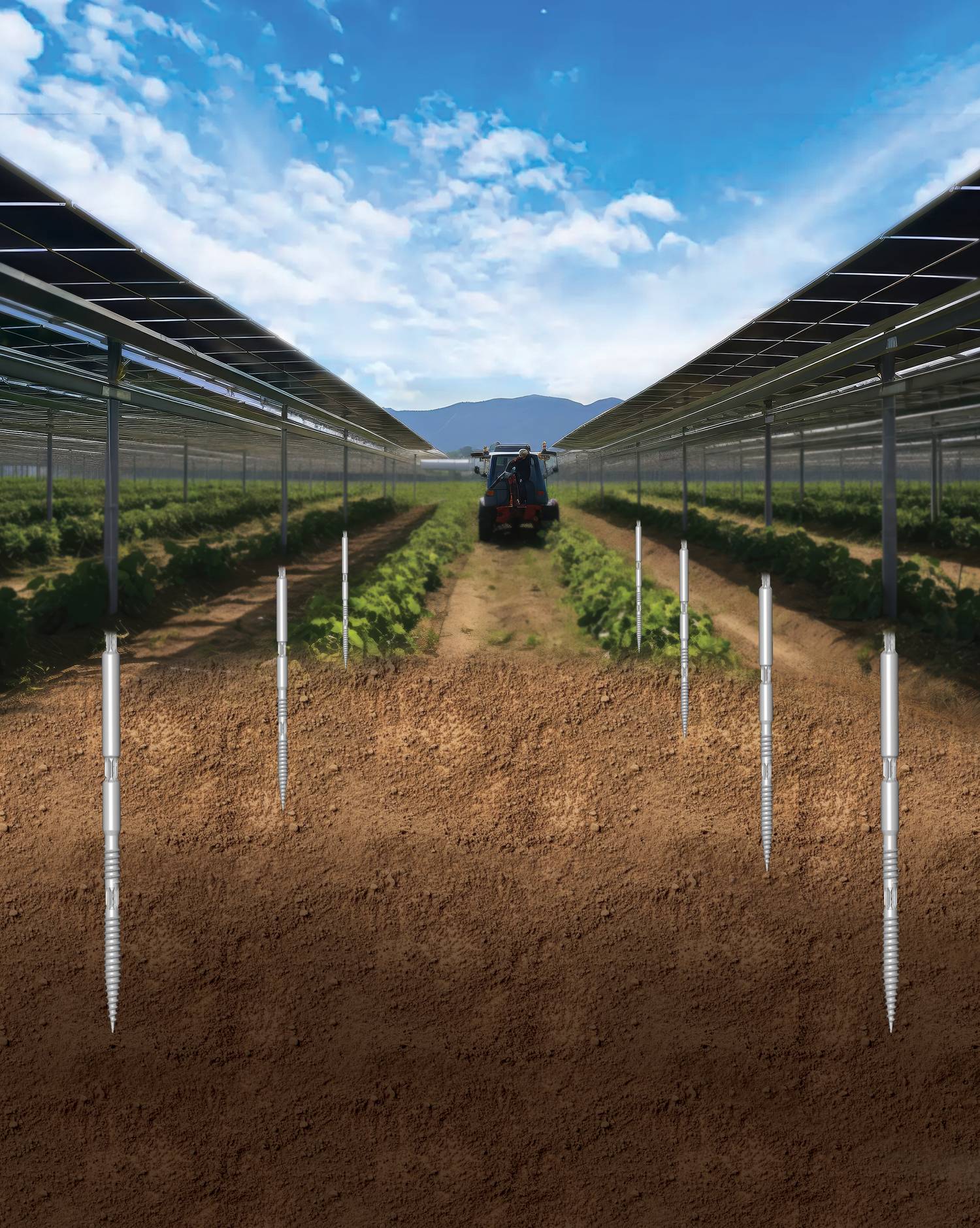
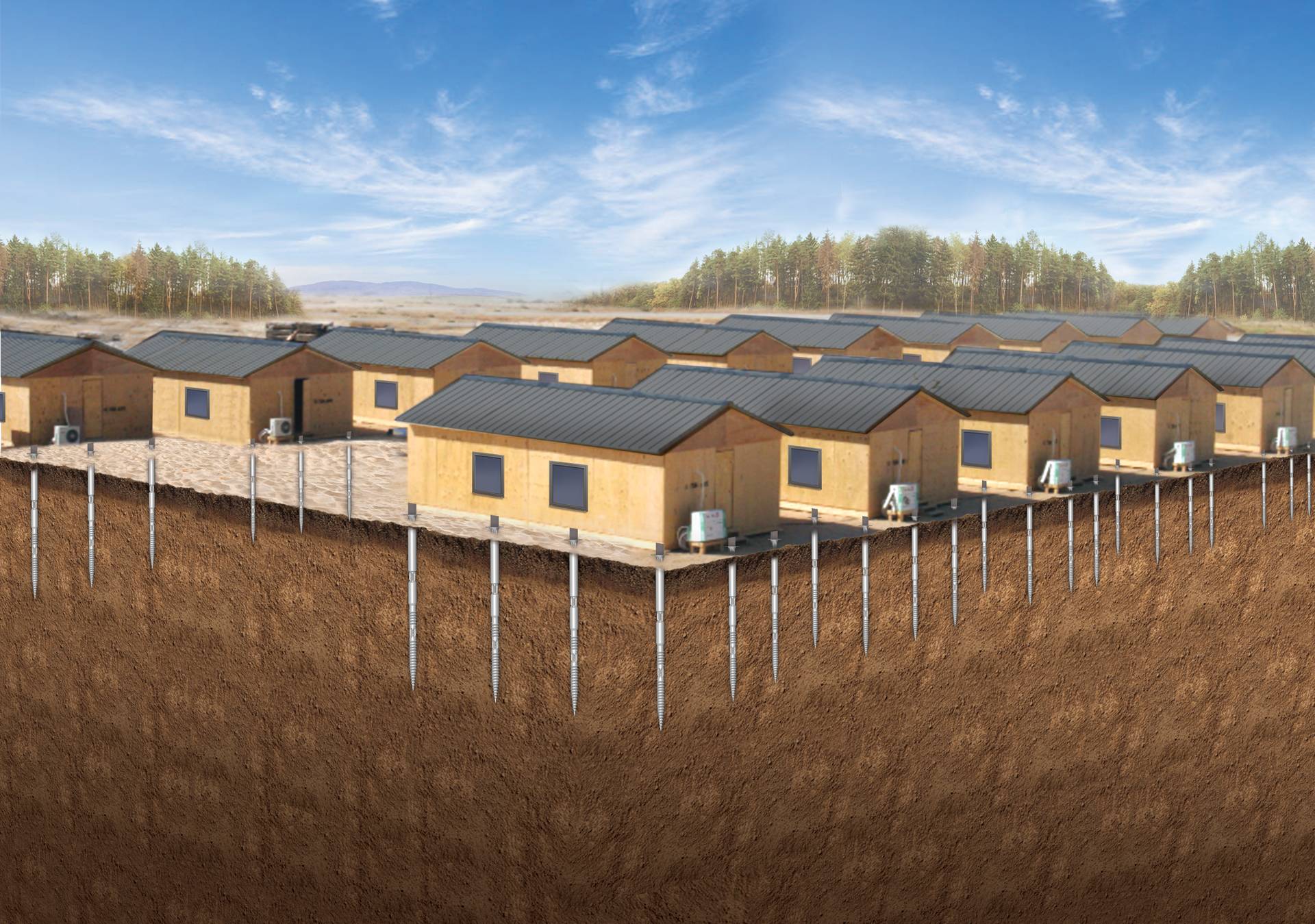
Screw pile foundations take the load deeper without removing soil. The pile displaces and compacts the ground during installation, and its capacity comes from shaft friction and tip load in denser layers. That compaction adds to the bearing capacity of the foundation. The guide to displacement screw pile foundations explains the mechanism in detail.
What Are the Main Differences at a Glance?
Screw pile foundation | Concrete foundation | |
Site preparation | Not required | Excavation and formwork |
Ready for load | Immediately after installation | Once the concrete has gained strength |
Spoil | None, the soil is displaced | Excavated soil to transport or store |
End of service | Dismantled, no concrete left in the ground | Broken out and removed as rubble |
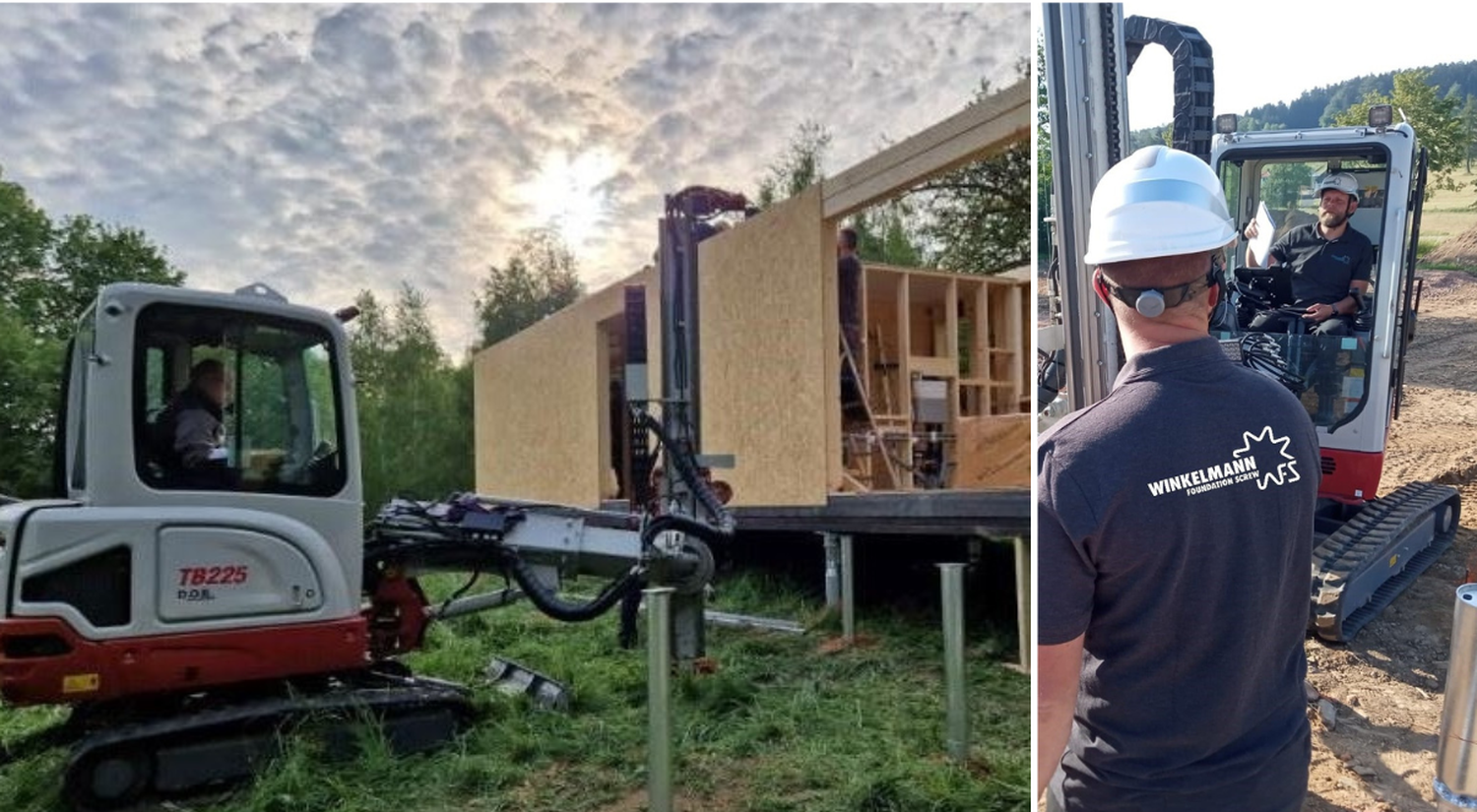
Screwing in a 3 m pile with a mini excavator takes 20 to 30 minutes for a two-person team, and the structure can be loaded immediately. The foundation stage drops off the critical path. Screw pile installation uses lightweight equipment that reaches hard-to-access locations.
How Do the Costs Compare?
Comparing the price of a pile with a cubic meter of concrete misses most of the bill, which builds up in the work around the material. Screw piles need no excavation or spoil removal, and the next trades start with virtually no downtime. A fair comparison covers the total cost of the foundation stage, including time on site. WFS engineers quote each project individually, because soil and loads set the number and length of the piles.
How Is the Load Capacity of Screw Piles Verified?
With a static load test on site. Pile load testing according to EN ISO 22477 covers compression and tension, plus lateral tests where needed, at about five hours per test.
The output is a load-displacement curve and a detailed report. The maximum displacement for the pile under the test load must not exceed 10% of the pile diameter. The design starts from geotechnical data, and the load test checks it against the actual ground.
When Is a Concrete Foundation the Better Choice?
Some sites still favor concrete, typically where:
The building has a basement, so the excavation happens anyway
Rocky ground or buried obstacles call for pre-drilling and slow installation down
The required loads exceed the load-bearing capacity of screw piles
The geotechnical report and the loads, not habit, should decide which foundation a structure gets.
Send your project documentation and geotechnical report to the Winkelmann Foundation Screw engineering team for a foundation design matched to your soil and loads. Contact Winkelmann Foundation Screw for a quote.
FAQ
Do Screw Piles Need a Geotechnical Survey?
Yes, as with concrete. The survey should reach at least 5 m below final ground level and 2 m below the bearing layer, and the geotechnical engineer should know beforehand that screwed steel displacement piles are planned, with their diameter and loads.
Can Screw Piles Reinforce an Existing Concrete Foundation?
Yes. Piles installed beside the existing footings take part of the vertical load and limit further settlement, with no excavation. In an industrial hall in Łódź, WFS reinforced the foundations in a few days while production continued without interruption.
How Long Do Screw Piles Last in the Ground?
It depends on soil aggressiveness. Sandy soils carry the lowest corrosion risk, while peat and the zone of fluctuating groundwater are the most demanding. WFS piles are factory hot-dip galvanized with a minimum 70 µm coating, plus extra protection in harsher conditions. Under normal ground conditions a lifetime of more than 100 years can be obtained.